

What Is a Dairy Allergy?
An allergy to cow’s milk is a prevalent food allergy in babies and young children, occurring in about 2.5 to 3% of children under 3 years old. Although people usually outgrow a milk allergy, it can sometimes persist into adulthood.
If some children are allergic to fresh milk but can tolerate baked milk without an allergic reaction, they are more likely to outgrow the allergy earlier.
On the other hand, if some children have high levels of antibodies against cow’s milk, the allergy is more likely to continue. A doctor can use a blood test to measure these antibodies and predict whether the child could outgrow the milk allergy.
What Causes a Milk Allergy?
A milk allergy is the body’s response to a protein in milk. When someone with a milk allergy consumes milk, the liquid’s proteins bind with immunoglobulin E (IgE) antibodies from their immune system. The immune defence sees this as a threat, leading to the symptoms of an allergic reaction.
Many people with a cow’s milk allergy do not tolerate milk from other animals, such as goats and sheep. In addition, milk protein might be present in other products, such as:
- Sausages
- Diet meat
- Bodybuilding and energy drinks
Symptoms of a Milk Allergy
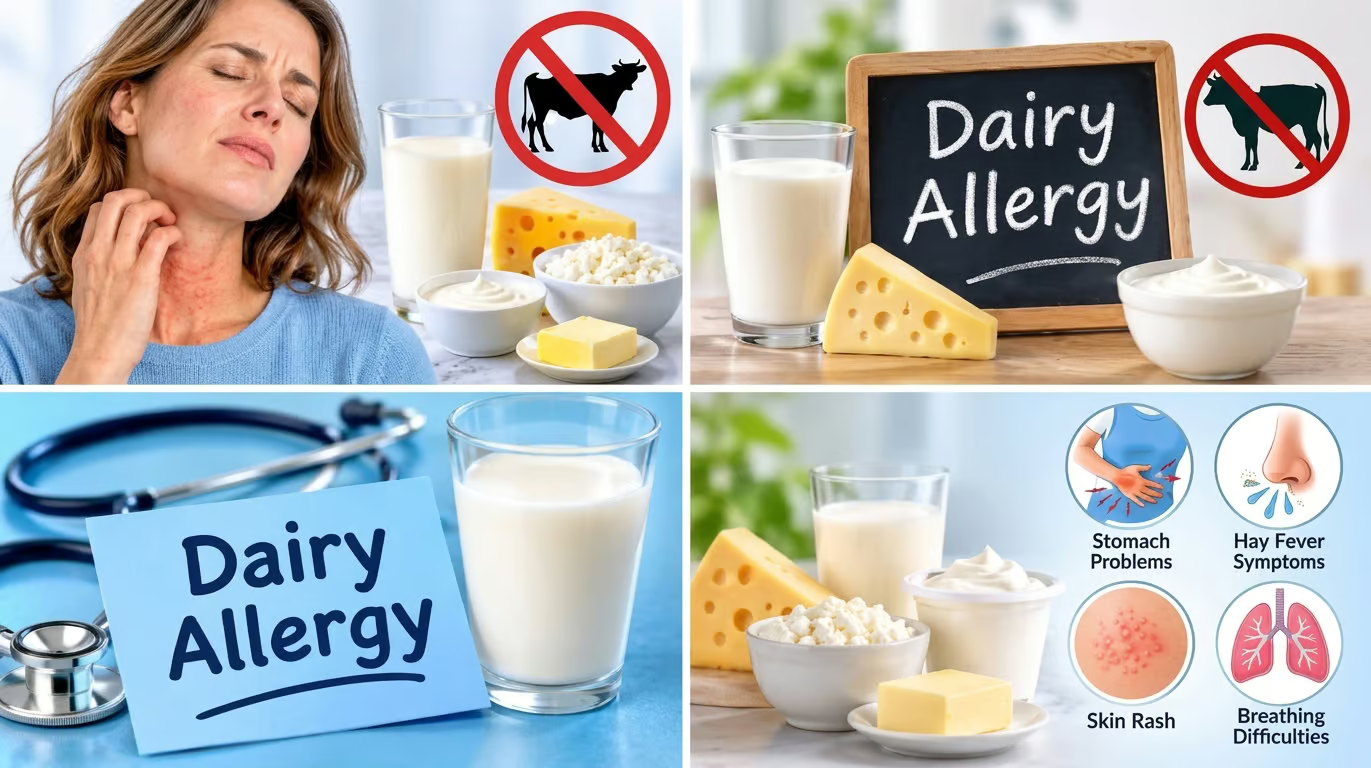
Symptoms of milk allergy can range from mild to severe and could be life-threatening. They usually occur within 2 to 3 hours of consuming milk and include:
- Hives
- Wheezing
- Itching or tingling around the mouth or lips
- Coughing or shortness of breath
- Vomiting
- Anaphylaxis
What Is Lactose Intolerance?
Lactose intolerance is a digestive condition in which an individual’s body is deficient in lactase.
Lactase is a digestive enzyme that breaks down the milk sugar lactose. When an individual does not have enough lactase and consumes dairy, this can cause gas, gastrointestinal discomfort, and diarrhoea.
How Does a Dairy Allergy Develop?
When a person experiences an allergic reaction to dairy, it is the result of how their body reacts to certain proteins in dairy products.
Two of the main proteins in milk—whey and casein—can cause an allergic reaction in some individuals.
When a person with a dairy allergy consumes dairy, the body’s immune system responds to a specific milk protein and triggers an immune response. It then attempts to neutralize the protein. So, the next time the body comes into contact with the protein, the immune system recognizes it.
Treatment of a Dairy Allergy
In order to avoid a serious reaction, follow these precautions:
- Check food ingredients when buying food over the counter.
- Look for ingredients in processed food.
- People can often find milk protein in unexpected foods, such as salad dressings, bread, and other baked goods.
- Look for ingredients such as whey and casein.
At a Restaurant
Ask about the ingredients in the food you’re ordering, as well as the food preparation.
If the allergic reaction is mild, an individual could take an over-the-counter antihistamine to help ease the symptoms.
While some other individuals may have severe reactions to dairy and may need epinephrine, individuals with severe reactions should carry epinephrine at all times.
Individuals or those with children who experience discomfort, a rash, or other symptoms of an allergic reaction after consuming dairy should speak with their primary doctor to determine the cause.
There are many plant-based alternatives to cow’s milk, including:
- Soy milk
- Coconut milk
- Oat milk
- Hemp milk
In Conclusion
While many children outgrow dairy allergies, most allergies in adults do not disappear over time. So, an adult will likely have it for the rest of their life.
That being said, such individuals should work out a plan with their medical practitioner or medical consultant.
Website Disclaimer
The information on this website is for general information only and is not intended to replace professional medical advice, diagnosis or treatment.