

Anemia occurs when the body has fewer healthy red blood cells or a lower-than-normal level of hemoglobin, which reduces the blood’s ability to carry oxygen throughout the body. A person with anemia may feel tired or weak. Anemia can lead to symptoms including fatigue, shortness of breath, and lightheadedness. According to MedlinePlus, anemia can develop for several reasons, including blood loss, reduced red blood cell production, or increased destruction of red blood cells.
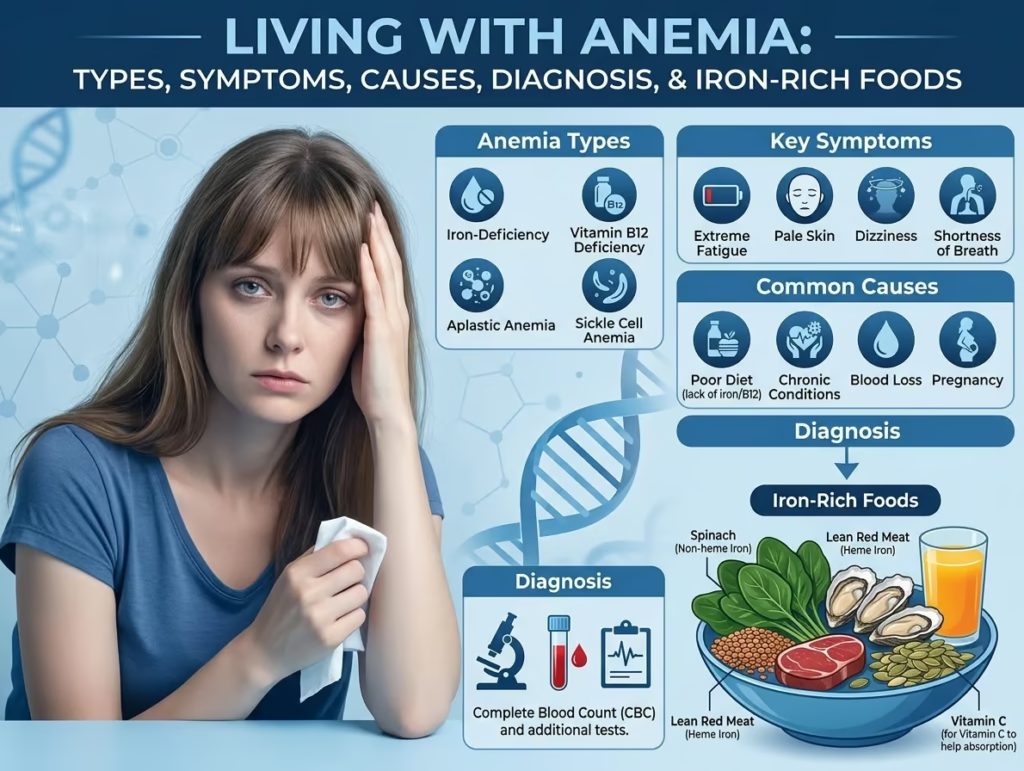
The most common symptom of anemia is fatigue. Other symptoms include a pale complexion, a fast or irregular heartbeat, shortness of breath, chest pain, headaches, and lightheadedness. Learn more about the symptoms and causes of iron deficiency anemia.
However, symptoms vary from person to person. Some people with mild anemia may experience few or no symptoms. There are many forms of anemia, and each type has different causes and symptoms. Some common types of anemia include:
- Iron Deficiency Anemia
- Vitamin B12 Deficiency Anemia
- Aplastic Anemia
- Hemolytic Anemia
Iron Deficiency Anemia
Iron deficiency anemia is the most common form of anemia. It occurs when the body does not have enough iron to produce sufficient hemoglobin, which is needed to carry oxygen in red blood cells. Common causes include a diet low in iron, heavy menstrual bleeding, frequent blood donation, pregnancy, certain digestive conditions, and blood loss. Some medications, including ibuprofen, may also contribute to gastrointestinal bleeding. Read the NHS guide to iron deficiency anemia for more information about its causes and treatment.
Vitamin B12 Deficiency Anemia
Vitamin B12 is essential for the production of healthy red blood cells and the proper functioning of the nervous system. If a person does not consume or absorb enough vitamin B12, they may develop anemia. Some symptoms include difficulty walking, confusion or forgetfulness, vision problems, diarrhea, muscle weakness, and a sore or inflamed tongue. Learn more about vitamin B12 and folate deficiency anemia.
Aplastic Anemia
In aplastic anemia, the bone marrow cannot produce enough new blood cells. This rare condition can develop when the immune system mistakenly attacks the bone marrow’s blood-forming stem cells. Certain medications, infections, and other conditions may also contribute to its development.
Hemolytic Anemia
In hemolytic anemia, red blood cells are destroyed faster than the body can replace them. Possible causes include autoimmune diseases, infections, certain medications, bone marrow problems, and inherited conditions such as sickle cell disease and thalassemia. Symptoms may include dizziness, weakness, jaundice (yellowing of the skin or eyes), dark urine, fever, and abdominal pain.





Diet and Iron-Rich Foods
If nutritional deficiencies are responsible for anemia, improving your diet may help support healthy red blood cell production. Iron-rich foods include fortified cereals and bread, green vegetables such as kale, spinach and watercress, beans, lentils, brown rice, meat, nuts, seeds, fish, tofu, eggs, and dried fruits such as apricots, prunes, and raisins. Plant-based sources of iron can be especially important for people who do not eat meat. Eating vitamin C-rich foods alongside plant-based iron sources may also help improve iron absorption.
A balanced diet is important for overall health. Explore our guide to building a healthy body and maintaining a balanced lifestyle for more practical wellness tips. You can also read our guide to bone health, essential nutrients, and healthy food choices.
To diagnose anemia, doctors commonly use a blood test called a complete blood count (CBC), also known as a full blood count (FBC). This test measures different components of the blood, including red blood cells and hemoglobin. Additional tests may be needed to identify the underlying cause. Read more about blood tests and why healthcare professionals use them.
People following vegetarian diets can obtain iron from foods such as beans, lentils, spinach, tofu, nuts, seeds, and iron-fortified cereals. Vitamin C-rich fruits and vegetables can help the body absorb plant-based iron. If you suspect an iron deficiency, consult a healthcare professional before starting iron supplements.
Medical Disclaimer: This article is intended for general educational purposes only. It does not replace professional medical advice, diagnosis, or treatment. If you experience symptoms of anemia or have concerns about your health, consult a qualified healthcare professional.